
walls of indifference: breaking through legal barriers.
Although communities are pushing for better environmental policies, state governments ignore them in favor of other financial pursuits. In what capacity can International Law intervene?

I. Introduction
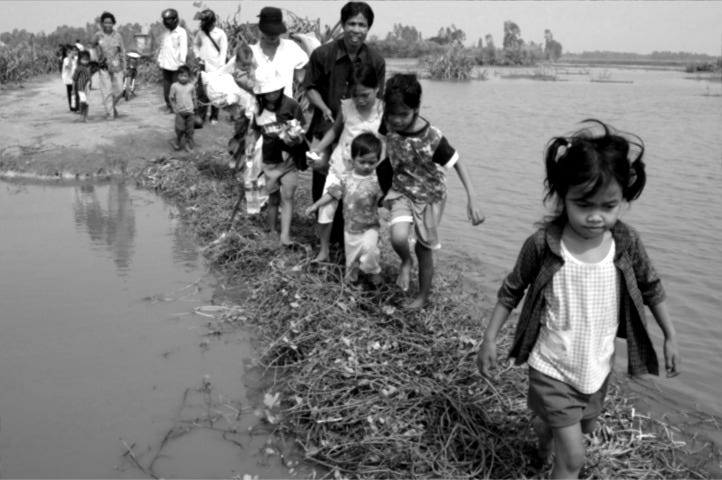
Often, we hear on the news ‘’displacement’’, ‘’millions forced to flee due to environmental disasters’’ or even, in more dramatic situations, ‘’death’’, ‘’calamity’’, ‘’disaster’’. There is no way around it, though: the truth is that our world is moving towards an irreversible path that leads only to resource destruction and mass migration due to the calamities countless nations face, which destroys homes and prospects of a safe future.
The lengths of this mass displacement cannot be predicted – as stated by UNHCR1 (United Nations High Commissioner for Refugees), environmental sustainability and safety cannot be measured, for it depends on the measures nations take to adjust to climate change; moreover, the causalities of such disasters are complex, as factors such as conflict and national fragility complicate the attainment of data pertaining to the link between displacement and climate change.
As we look at such disheartening news, we can’t help but feel destitute; how can we change the world when the damages done to Nature, to Man, feel irreversible? In reality, whilst the world’s temperature has already risen 1.1ºC when compared to the late 1800s and the climate has already began shifting beyond our control, it is not too late to act: as my essay will theorize, we believe that the only way forward is through the recognition and aid of these displaced people, as a priority, and, secondly (but equally relevant) the mutual global cooperation towards solutions that can prevent and mitigate damages and risks relating to environmental disasters – from state responsibility to the analysis of past court cases, we will provide insight into a panoply of solutions inspired by information provided by previous articles on the topic and relevant court decisions for the construction of the thesis I decided to present, believing that environmental migrants deserve the right to adequate legal protection according to their status as displaced people due to grave environmental circumstances.
II. Environmental Migrants: Who are they?
a) Origin of the concept
Forced migration, as a phenomenon, is as old as time; for thousands of years, people have tried to flee from strife in an attempt to look for security and quality of life elsewhere. Reasons, however, have varied throughout the centuries: wars, famine, unlawful rulers, prosecution based on ethnicity, race, gender, …, etc. But, as we get closer to the 21st century, we see a new motive arise: climate disasters.
The 1951 Geneva Convention was the first time countries reunited to discuss the legal status of refugees and establish minimum standards for their treatment. Posteriorly, the 1967 Protocol to the Geneva Convention broadened the status of refugee to…
«Any person who: owing a well-founded fear of being persecuted for reasons of race, religion, nationality, membership of a particular social group, or political opinion, is outside the country of his nationality and is unable to, or owing to such fear, is unwilling to avail himself of the protection of that country»2
Nowadays, its questionable if such definition can satisfy the necessities displaced people face, namely when it comes to those forced to migrate due to environmental disasters. At this time, there’s not a recognized definition for such phenomenon – in part, this is due to the fact that it’s very difficult to isolate environmental factors from other migration factors, and, moreover, to the lack of clarity on what makes migration forced or voluntary.
Current scholarships studying the gaps in regard to refugee, environmental and human rights law are divided by two schools of thought: the maximalists and the minimalists. The maximalist school believes there are large numbers of existing environmental refugees, predicting even larger numbers in the near future and alas creating a direct and causative connection between climate changes and human migration. Meanwhile, the minimalist school highlights the complexities of environmental and social systems and their respective roles, questioning thus the existence of a direct causal link between climate change and migration.
The International Organization for Migration has chosen the preferred term ‘’environmental migrants’’, which will be used throughout this essay. Such concept refers to «persons or groups of persons who, for compelling reasons of sudden or progressive changes in the environment that adversely affect their lives or living conditions, are obliged to leave their habitual homes, or choose to do so, either temporarily or permanently, and who move either within their country or abroad 3».
As the number of environmental disasters increase and the dramatic consequences make themselves present4, the urgency to create mechanisms of effective protection of the people affected by such disasters is becoming more and more dire.
b) Current status
At present, although there’s not a definitive term of what constitutes a person who was displaced/forced to leave their homes due to dire environmental circumstances, we cannot ignore their existence.
The media has already adopted the term ‘’environmental refugee’’, to the great distaste of some in the international community, finding that the term refugee cannot be applied to such situations as it does not fit the definition provided by the Geneva Convention.
The most relevant question to pose, then, is: what does this mean for these people? Without the protection provided by the Geneva Convention, how can we guarantee that people forced to flee their homes (even in a domestic scope) due to tsunamis, earthquakes, hurricanes, etc., can ensure their rights are safeguarded? The infelicitous answer is that they cannot; excluded from the Geneva Convention, there’s no legal obligation (only ethical) for States to provide such people with the standards of treatment there envisioned for refugees.
III. The role of International Law
a) State responsibility
The principles ruling State responsibility were established by the ILC in 2001, and afterwards noted by the United Nations General Assembly5, and they are recognized as customary international law. Altogether, these principles envision the responsibility of States in case of the breach of an international legal obligation6, through acts or omissions with a causal link between the wrongful act/omission and the damage caused.
The issue lies not within the principles themselves, but with their application scope in the legal framework of situations raised by environmental migrants, since there’s no specific legislation to regulate their situation or States’ obligations concerning the prevention of environmental disasters (namely, can States deny entry to environmental migrants without any type of accountability?).
However, we can divert the scope of States’ obligations, regarding their responsibility, for being the perpetrators of situations that may provoke the rise of environmental refugees, i.e. the breach of human rights obligations, international treaty obligations and customary law obligations.
i) Breach of human rights obligations
Besides the 1966 Universal Covenants, there’s no binding international text regarding human rights that provides rights pertaining to a ‘’healthy or sustainable environment’’ or any other specific rights regarding the protection of humans in case of grave environmental catastrophes.
Numerous articles could be associated with the breach of human rights obligations, such as Art. 12, §4 (Covenant II)7 and others.
We can discern two categories of obligations: (i) obligation for the State to refrain from certain courses of conduct; (ii) the obligation to take protective measures under certain conditions. We believe that an obligation to allow entry can be inferred from these rights.
ii) International Treaty Obligations
According to Article 26 of the Vienna Convention on the Law of Treaties, States must abide to obligations under international treaties which they’ve signed (according to the universal principle pacta sunt servanda). Thus, in case of a breach of their contractual obligations, they must reinstate the status quo ante or, if impossible, repair the damage caused to an attainable extent.
In international conventions there’s not much clarity when it comes to the prevention of environmentally forced migration, however, we cannot ignore the implicit objective of these treaties, which aim not only at the protection of the environment but also to ensure security and sustainability to every single citizen of the globe. Therefore, we consider that international conventions on the environment (particularly those regarding climate change8) aim, at least implicitly, to prevent people from fleeing due to environmental degradation.
We cannot, nevertheless, admit international responsibility on the basis of violation of international conventions on the environment or climate change if the State has complied with its own commitments under a particular convention9,10 (even if migratory flows occur because of environmental degradation).
iii) Customary Law Obligations
Based on the Trail Smelter11 case, arises a principle of the same name, whereas a State must prevent significant ecological damage from arising in other States due to activities on its territory, or, should such damage arise, the State must ‘’repair’’ the consequences of such damage (‘’no-harm’’ rule). This obligation is enforced regardless of the legality of the activity involved, (i.e., States are under the obligation to prevent ecological damage from arising in other States, even if it surfaces from activities that are legal).
iv) Summary
International Law possesses a number of binding obligations, which can be connected to environmental migrants, although not through a direct link. However, it’s many times impossible to discern a specific State as responsible for such migrations, which, as a consequence, makes international mechanisms for State accountability unapplicable.
Moreover, when it comes to the application of preventive policies, many States do not possess the resources needed to take adequate measures, which, in principle, prevents them from international responsibility12.
b) Court Case Analysis
i) Ioane Teitiota v. New Zealand (2020)
Ioane Teitiota, a Kiribati citizen, claimed that the raise in sea levels and environmental degradation were imposing citizens to flee the island, and seeks to appeal against New Zealand’s inaction in granting him asylum. However, High Court deemed that the impacts of climate change on Kiribati did not qualify Ioane as a refugee under the 1951 Geneva Convention or the International Covenant on Civil and Political Rights (ICCPR), and furthering that no serious harm or violation of human rights had been verified. In the analysis given to such decision appeal by New Zealand’s Court of Appeals, the Court noted that climate change is an urgent problem, but the 1951 Geneva Convention did not address the issue adequately.
After that, Ioane appealed again to the Supreme Court of New Zealand (SC). The SC merely confirmed the lower courts’ conclusions, agreeing that Ioane did not qualify as a refugee under International Human Rights Law. Yet, SC noted that their decision does not exclude a possible pathway into the Geneva Convention, or the creation of jurisdiction based on the protection of these individuals.
This case highlights the emerging intersectionality of climate change, human rights and migration law, possibly setting a precedent for future claims, yet the grant of asylum remains inflexible due to the restrictions posed by the Geneva Convention due to the prerequisites in place for granting someone the status of refugee.
Moreover, one would like to ask what does ‘’serious harm’’ entail, when the SC claims that «while Kiribati undoubtedly faces challenges, Mr Teitiota does not, if returned, face “serious harm”» , as one could argue that such definition should extend beyond immediate physical threats, in that way including long-term threats to life, dignity and security (the rising sea levels may, for example, threaten water supplies, fertile land and infrastructure – taking into account that the access to drinkable water and sustainable living conditions are fundamental human rights). In this way, the SC is using a narrow and immediate concept of harm, when we know that environmentally induced harm can not only be sudden, but also dangerous, as it affects victim’s capability to supporting a safe, healthy and dignified life. Let’s not forget, too, that the Human Rights Council (HCR) has recognized the links between climate change and human rights , emphasizing that threats to survival harm the right to life and dignity.
ii) Duarte Agostinho and Others v. Portugal and 32 Other States (2020)
Six Portuguese nationals filed a complaint with the European Court of Human Rights (ECHR), against 33 countries, where they alleged violations of human rights (more specifically, Articles 2, 8 and 14 of the European Convention of Human Rights (ECoHR) which envision the right to life, privacy and not to experience discrimination respectively) by failing to take satisfactory measures towards sustainability.
The youth claims that their right to life is threatened by the results of climate change in Portugal, and that their physical and mental health is threatened by heatwaves which force them to spend more time inside their homes – and the future is only more disheartening.
After four years, in 2024, the European Court declared the application inadmissible. With respect to extraterritorial jurisdiction, the Court found no grounds to expand the judicial application as requested. Territorial jurisdiction was therefore only established in respect of Portugal, and the complaint was declared inadmissible against other respondent States; and because the applicants had failed to comply with the adequate procedural requirements to appeal to the ECHR, the complaint against Portugal was, too, deemed inadmissible.
This is a novelty case; youth-led, it targets multiple states in an attempt to make them accountable for their own omissions. Unfortunately, we could not see a true verdict, but the arguments presented could be picked up in the future for another case, which sounds not only promising but augurs a hopeful future when it comes to youth reclaiming legal prerogatives which are rightfully theirs.
IV. Reimagining Security: Solutions for Environmental Displacement
a) Mechanisms of damage mitigation
Firstly, we should find mechanisms which address the root causes of displacement, as a way to reduce the impact of environmental harm and, thus, prevent climate-related displacement.
An adequate approach would be through expanding Human Rights obligations, through the adoption by States of preventive measures that can safeguard basic necessities in the more environmentally vulnerable regions13.
Regional support mechanisms are of utmost importance, too, especially if considering that domestic and localized help is more able to adapt to each region’s specific needs (i.e., one region may need flood preventive measures whilst another may necessitate drought-related measures), which makes the handling of situations a ‘’smaller’’ tasks, in geographical and political terms14.
Expand the Loss and Damage Fund15 to support climate adaptation measures in developing countries, preventing mass displacement, as they’re the nations most likely to suffer mass migration due to environmental causes – moreover, one could propose that proportionality becomes a key component in determining each State’s contribution, through the evaluation of emission and pollution rates, etc (alas, each State would contribute more or less, in conformity with the amount of emissions and pollution they create).
b) The creation of new legal instruments
One of the more obvious but effective solutions would be to truly enforce pacta sunt servanda16 – through the Vienna Convention –, perhaps through a new protocol with stricter accountability clauses in case of breach of their obligations (which would comprise of non-refoulement, access to education and other basic necessities), whilst taking the opportunity to provide the international community with a real environmental migrant status.
Although, it would be most interesting to see into motion the incorporation into International Law of some form of an intergenerational fairness principle which – built on the precedent of cases like Duarte Agostinho’s – can acknowledge and emphasize governments’ obligations towards their younger citizens. Alongside such policies, we encourage the creation of a shared responsibility framework, where multiple states can be held accountable, in a cumulative manner, for their contributions to the worsening of our environment.
V. Conclusion
The current troubles of environmental displacement stand as a testament for States’ failure to comply with previous agreements and safeguard the longevity of Earth and its residents. Often, we may feel disheartened upon hearing and reading volumes and volumes of terrifying news on the state of our world, yet it’s urgent not losing hope; cases like Diogo Agostinho’s show that not everyone has given up, and our youth and population is still fighting for a better place for all.
Through the study of State responsibility and court cases – where we can clearly observe that law has gaps that need to be filled with urgency – we can come to the conclusion that, as it has been since the beginning of civilization, Law is the only instrument capable of delivering States the accountability they warrant, and ensure legal security to all humans through the creation of diverse treaties and legislation that aims to protect and reinforce rights which would’ve been, otherwise, negligently forgotten. Of course, it possesses its flaws; the objective of this essay wasn’t merely the pointing out of such faults, but also to provide satisfactory enough answers and solutions where they’re found lacking.
Alike all sciences, Law is alive and breathing; it mutates and evolves through innovation and creative theories. Taking into account the more-than relevant role Law plays in our everyday lives and, furthermore, the importance it poses to everything, we cannot forget, and in no circumstance disregard the power it holds. Hence why it’s relevant to break and evolve from old canons, whilst keeping in mind what they can teach us and use them as a base for new legal texts and instruments which can better serve society.
In our specific case, what this means is to move past old ideas which limit the concept of refugees and forced migrants, as its prerequisites, whilst not outdated, lack the addition of contemporary causes for displacement – one of which is, of course, climate change and environmental disasters.
VI. Bibliography
Articles
Hossein Alekajbaf, ‘The Legal Status and Causes of Environmental Refugees Under International Law’ (2014) 8(21) Advances in Environmental Biology 997
Mathias G. Sahinkuye, ‘A Theoretical Framework for the Protection of Environmental Refugees in International Law’ (2019) 6 Transnat’l Hum Rts Rev 1
Astrid Epiney ‘‘’Environmental Refugees’’: aspects of international state responsibility’, (2011) Migration and Climate Change, Cambridge 388-415
Nina Hoing & Jona Razzaque, ‘Unacknowledged and unwanted? ‘Environmental refugees’ in search of legal status’, (2012) Journal of Global Ethics, 8:1, 19-49
Legal Documents and Court Cases Cited
The Geneva Convention and their Additional Protocols
Ioane Teitiota v. New Zealand, [2015] NZSC 107
United Nations Human Rights Council, ‘Human Rights and Climate Change’ Resolution 38/4 (5 July 2018) A/HRC/RES/38/4
Kolyadenko and Others v Russia App nos. 17423/05, 20534/05, 20678/05, 23263/05, 24283/05, 35673/05 (ECtHR, 28 February 2012)
Duarte Agostinho and Others v Portugal and 32 Other States App no. 39371/20 (ECtHR).
Websites cited
Kristy Siegfried, ‘Climate change and displacement: the myths and the facts’ | UNHCR (UNCHR, 15 November 2023) <https://www.unhcr.org/news/stories/climate-change-and-displacement-myths-and-facts> accessed 4 December 2024
WMO Report, ‘Climate and weather disasters surge five-fold over 50 years, but early warnings save lives’ (UN News, 1 September 2021) <https://news.un.org/en/story/2021/09/1098662> accessed 3 December 2024
Fiji Government, ‘World’s First-ever Relocation Trust Fund for People Displaced by Climate Change Launched by Fijian Prime Minister’ (Fiji Government, 25 September 2019) < https://www.fiji.gov.fj/Media-Centre/News/WORLD%E2%80%99S-FIRST-%E2%80%93EVER-RELOCATION-TRUST-FUND-FOR-PEOP> accessed 4 December 2024
Kristy Siegfried, ‘Climate change and displacement: the myths and the facts’ | UNHCR (UNCHR, 15 November 2023) <https://www.unhcr.org/news/stories/climate-change-and-displacement-myths-and-facts> accessed 4 December 2024
Article 1.A.2. of the Geneva Convention
IOM and UNFPA, ‘’Expert Seminal: Migration and the Environment’’ (2008) 10 International Dialogue on Migration at 23.
According to UN News website, from 1970 to 2019, these natural hazards accounted for 50 per cent of all disasters, 45 per cent of all reported deaths and 74 per cent of all reported economic losses, WMO Report, ‘Climate and weather disasters surge five-fold over 50 years, but early warnings save lives’ (UN News, 1 September 2021) <https://news.un.org/en/story/2021/09/1098662> accessed 3 December 2024.
A/Res./56/83 (United Nations General Assembly, 28 January 2002)
Articles 1 and 2(a) and 2(b), A/Res./56/83 (United Nations General Assembly, 28 January 2002)
No one can be deprived of the right to enter his own country, but environmental degradation can become so dire that people affected must exit their nation and move abroad (moreover, cases where a State is disappearing on account of a rise in sea levels).
In example, the United Nations Convention to Combat Desertification (UNCCD) (1994) focuses on combating desertification and land degradation, two causes of forced environmental migration.
This, of course, should be considered, whilst never forgetting proportionality: realistically, many States may not possess the necessary funds to implement to the fullest the desired policies and measures, which means that they cannot be faulted for not implementing measures treaties deem mandatory if due to lack of resources.
For an a contrario resolution which furthers this idea, see Kolyadenko and Others v. Russia (ECHR) (2012)
(United States v. Canada) (1938 and 1941) 3 R.I.A.A. 1905
Supra (8).
Such as Fiji’s CROC Trust Fund.
As we transport the responsibility and funds to deal with these situations to the local governments, more capable in smaller-scale disasters and knowledgeable about their region’s characteristics.
Created in COP27
In efforts to control States’ gases emissions and, thus, control climate change and possible increases in Earth’s temperature.